
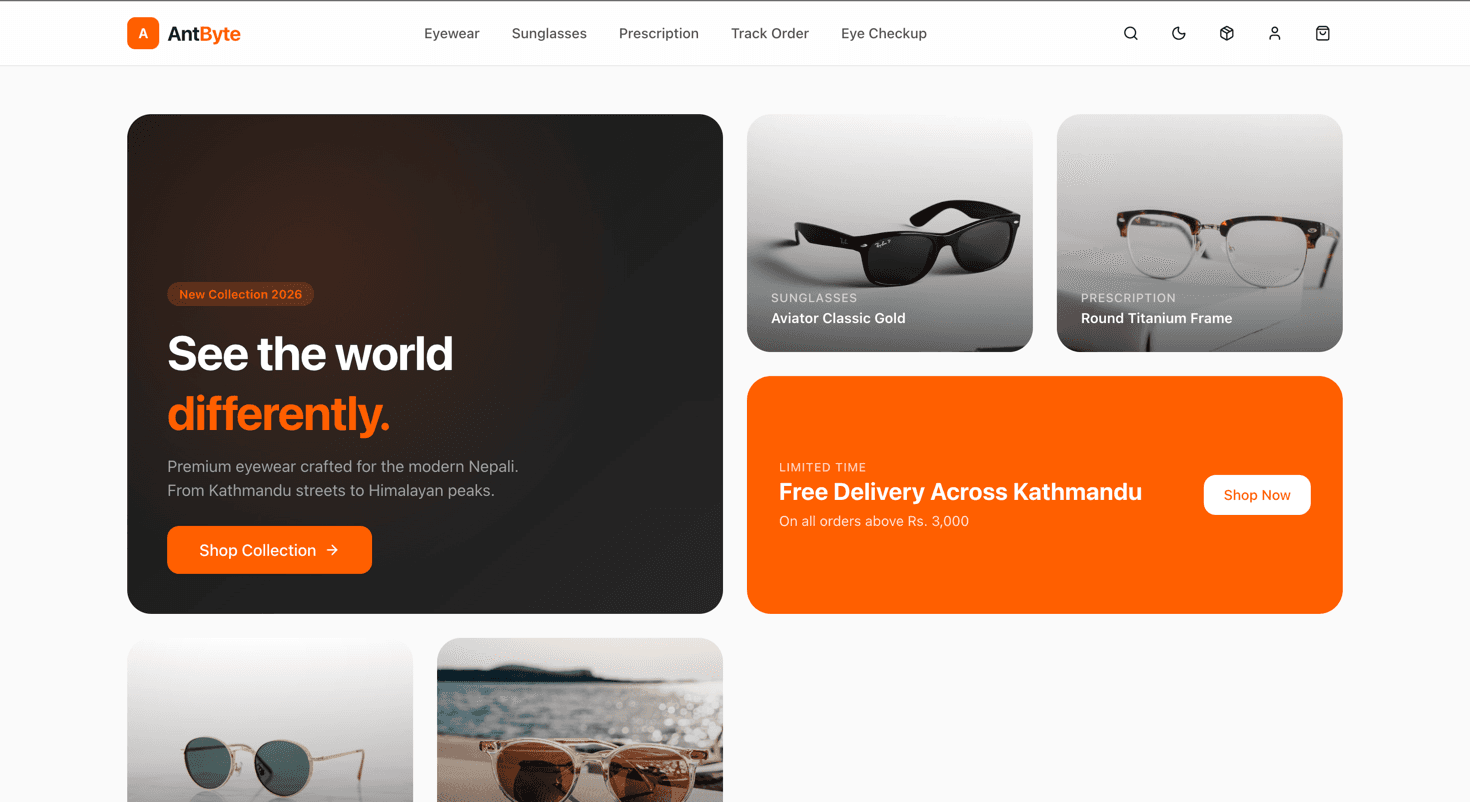
A behind-the-scenes look at how Antbyte Labs designed, built, and launched a production-ready e-commerce platform — from first wireframe to live checkout — in just six weeks.
Key Takeaways
- A behind-the-scenes look at how Antbyte Labs designed, built, and launched a production-ready e-commerce platform — from first wireframe to live checkout — in just six weeks.
The Brief
A client came to us with a familiar problem: they had a great product, a growing customer base, and a website built on an outdated platform that was costing them sales every single day. Slow load times, a clunky checkout, no mobile optimisation, and zero visibility on what their customers were actually doing.
They needed a complete rebuild — and they needed it fast. Six weeks. One team. No shortcuts on quality.
Here is exactly how we did it.
Week 1 — Discovery & Architecture
We spent the first week asking questions before writing a single line of code. What products do you sell? How do customers find you today? What does a successful purchase look like? Where are people dropping off?
By the end of week one, we had:
- A complete sitemap and user journey map
- A defined tech stack (Next.js, TypeScript, Firebase, Stripe)
- A component inventory — every UI piece we'd need to build
- A shared Figma file with the full design system: colours, typography, spacing, and the first set of high-fidelity screens
Architecture decisions made at this stage pay dividends for the entire project. We chose Next.js with server-side rendering so every product page would be fast and Google-indexable from day one. Firebase gave us a real-time backend that required zero infrastructure management. Stripe handled payments — because building your own payment flow in 2025 is a solved problem and not worth the risk.
Week 2–3 — Core Build
With design approved and architecture locked, the engineering team moved fast. We built in order of user priority:
- Product catalogue — dynamic routes, ISR for fast page loads, image optimisation via Next.js Image
- Cart & checkout — client-side cart state, Stripe Payment Element, webhook-based order confirmation
- Admin dashboard — product management, inventory tracking, order management
- Authentication — Firebase Auth with email/password and Google sign-in
We ran a daily 15-minute standup and used a shared Notion board to track progress. Nothing fancy — just clear ownership and no blockers sitting unresolved for more than 24 hours.
Week 4 — Polish & Performance
Features done. Now we made them fast and beautiful.
Every page was audited with Lighthouse. We hit 95+ on Performance, Accessibility, and Best Practices across all key routes. Image formats were converted to WebP. Critical CSS was inlined. Third-party scripts were deferred.
The result: a sub-1.8 second Largest Contentful Paint on mobile, on a real device over a 4G connection.
Week 5 — Testing & QA
We tested on real devices — not just Chrome DevTools. iPhones, Android mid-range phones, tablets. We ran through every user journey end-to-end: browse, filter, add to cart, check out, receive confirmation email, admin sees the order.
We also stress-tested the Stripe integration by running dozens of test payments — successful, declined, 3DS-challenged, network-interrupted. Every edge case handled gracefully.
Week 6 — Launch
DNS migrated. Deployment pipeline live. Monitoring set up. The client pressed the button on a Thursday morning.
No downtime. No bugs in production. Checkout conversion was up 34% compared to the legacy site within the first two weeks.
What We Learned
Six weeks is achievable when three things are true: the brief is well-defined before build begins, design and development run in parallel rather than sequentially, and decisions get made quickly without layers of sign-off.
Speed does not require cutting corners. It requires cutting scope creep.
If you have a project that needs to move fast without sacrificing quality, we should talk.
Enjoyed this article? Share it with others!
Written by
Antbyte Labs
Engineering Team · Antbyte Labs
Antbyte Labs is a Engineering Team at Antbyte Labs, sharing expert insights on technology, software development, and digital innovation to help businesses grow.